
Free Property Search
Find Your Next Wholesale Deal, House Flip, or Rental Property Investment.
Search Now
Jerry Norton
Jerry Norton
Nov 17, 2023
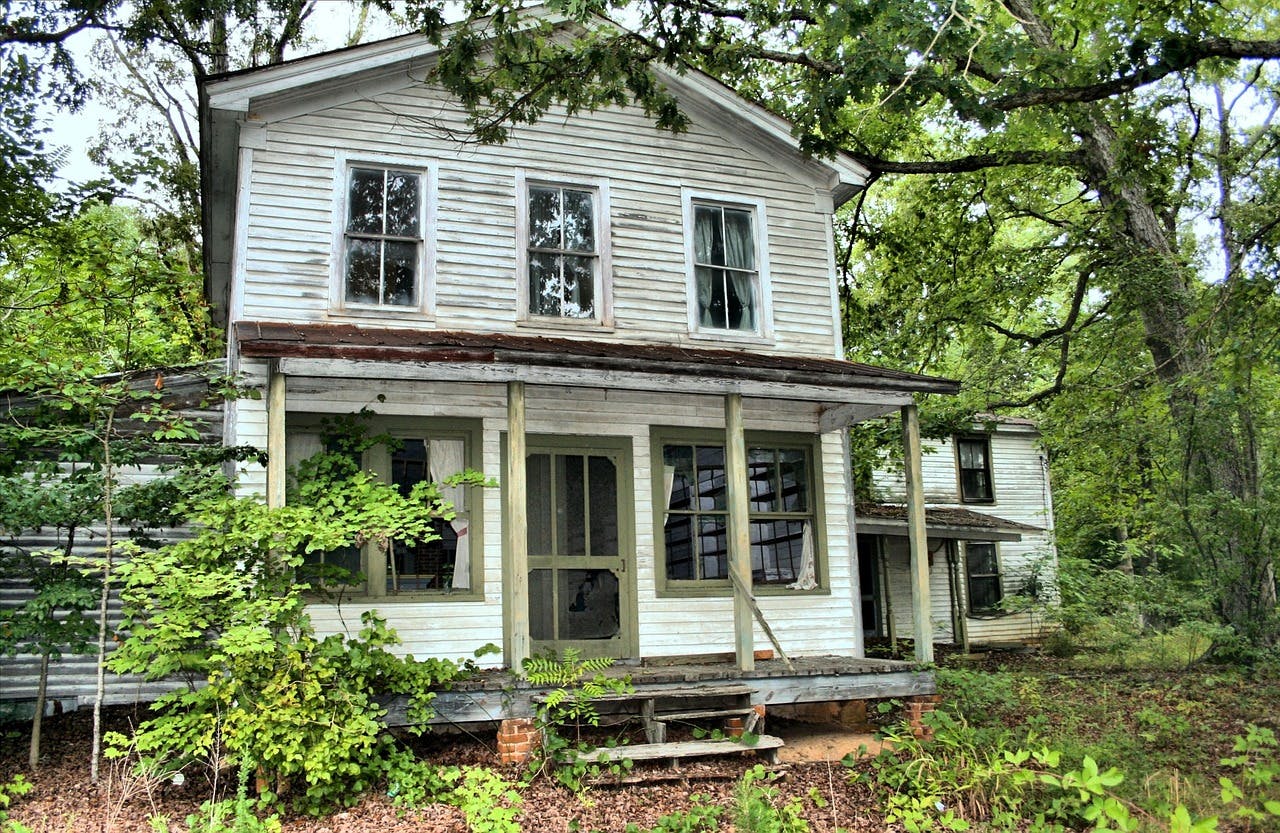
When searching for real estate leads, vacant properties can be a goldmine.
When searching for real estate leads, vacant properties can be a goldmine.
Not only are there no tenants to deal with; the owners are likely motivated to sell.
But vacant properties come with their list of challenges for real estate investors, including that they usually need renovation — and a lot of it.
When you flip a vacant property — ideally for a profit — you can receive gratification that you turned what was once empty into someone’s home where they will create life-long memories.
Because of these factors, vacant properties are in increasingly high demand.
As a real estate investor, it comes down to finding vacant properties.
How can you find a vacant property to invest in?
How can you tell if a property is vacant?
What are some red flags to be aware of when investing in vacant properties?
In this article, we’ll answer all of these questions — and more— to help you discover specific and proven ways to find vacant properties for your next real estate investment.
A vacant property is one of the best options when it comes to a fix and flip.
Why?
If a property is vacant, you as a real estate investor can usually get a below-market deal from a motivated seller and don’t have to deal with the headaches associated with moving a current tenant out or waiting for the current tenant to leave.
As soon as you buy the vacant home, you can begin renovations immediately. There doesn’t have to be waiting or delays.
This can help you flip the property and earn a profit quickly.
Plus, in terms of financing, seller financing is available when buying a vacant property.
That being said, there are downsides to investing in vacant properties.
Since a vacant house may have been sitting for an undisclosed amount of time, you might find infestations of mice and/or bugs, rot, overgrown yards, fire damage, and/or vandalism.
This is the biggest downside of investing in vacant properties — one may need more work than your typical fix and flip.
Also, a home inspection can be tricky since all utilities most likely have been turned off, so gas, water, plumbing, and electricity cannot be inspected.
Now that we’ve broken down the advantages and disadvantages of investing in a vacant home, how can you tell if a house is vacant?
There are often tell-tale signs that a house is vacant. This includes:
Any of these signs can show whether a house is vacant or unoccupied.
And that brings up another point: what’s the difference between vacant and unoccupied?
While "vacant" and "unoccupied" are terms often used interchangeably, keep in mind they have different meanings, especially when it comes to real estate investing.
A vacant home has no personal property inside, while an unoccupied property contains such furnishings — for example, a couch, dresser, or bed — but the homeowner is not currently living there.
For example, a summer home can be "unoccupied" when the owner is away, even if it's furnished.
If you’re ready to find a vacant property for your next real estate investing deal, here are proven and specific ways to do just that.
Using Propwire’s robust search tool, finding vacant properties in your area is just a click away.
Utilizing access to real-time MLS and off-market property data, you can filter by “Lead Types” and select Vacant homes.
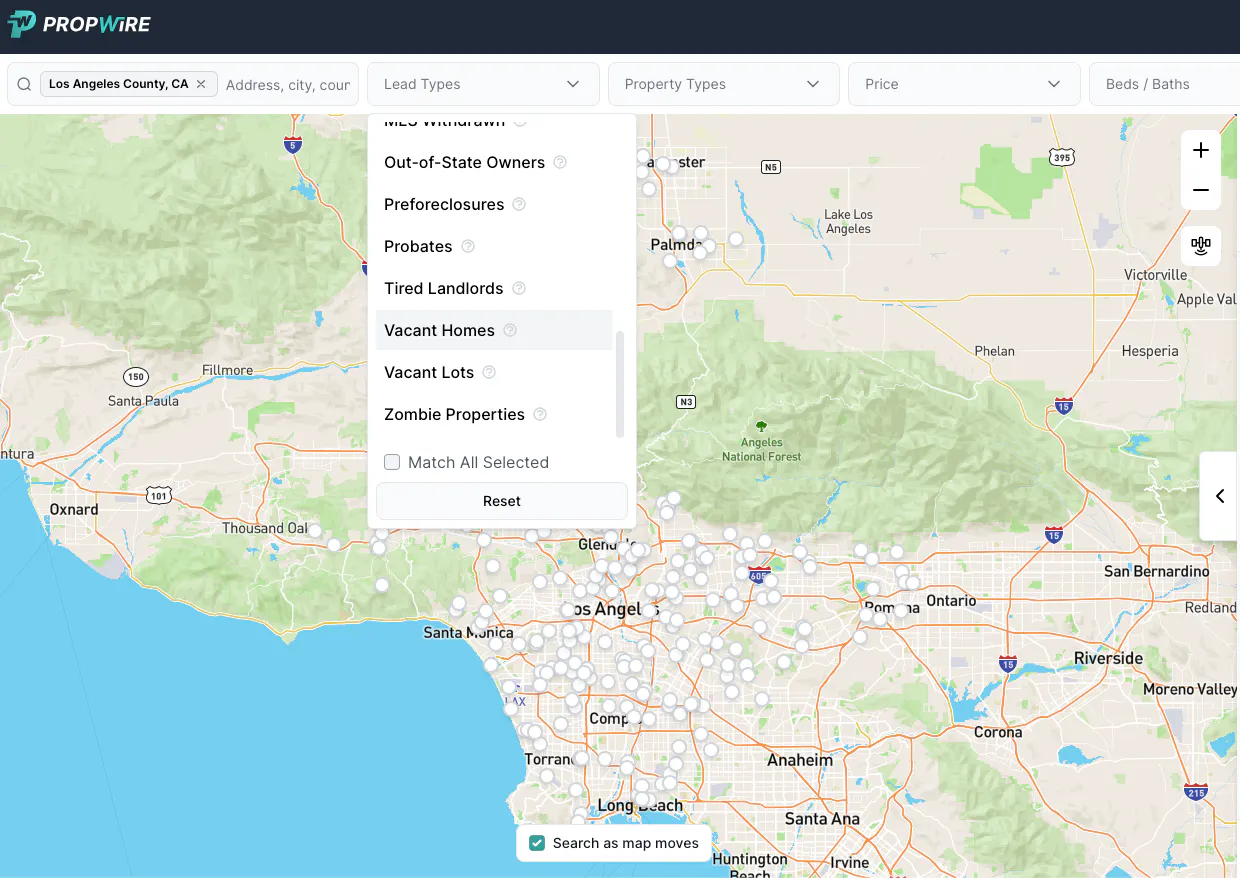
For real estate investors looking to invest in vacant lots, Propwire also includes this feature.
Both selections will provide vacant properties in your chosen location, and give you the option to skip trace to find and contact the owner of the property.
From there, you can begin the conversation about purchasing the property.
Using Propwire’s real-time database is one of the best and easiest ways to find vacant properties in your area today.
Another way to find vacant properties to invest in is by checking out the classifieds.
Craigslist, Facebook Marketplace and your local newspaper are proven ways to find vacant homes, along with contact information for the owner of the property.
Even better, in the case of a newspaper, it’s a low-cost option, and in the case of Craigslist and/or Facebook Marketplace, it’s free!
One of the easiest ways to find vacant properties is to drive around your neighborhood of choice, looking for signs of a vacant home.
If you see mail might be falling out of mailboxes on the curb, overgrown grass, or a house is boarded up, there’s a good chance it’s vacant.
To find and contact the owner, you can either leave a note in the mailbox, take down the address to use direct mail later on, or utilize a tool like Propwire to find the right contact information to start the conversation.
It’s a cheap option as well — the only cost here is transportation!
Once you have the contact information for a vacant property, you can draft letters and mail them to the specific address explaining your desire to purchase the property.
Another way to find a vacant property is to pay a bird dog to search for houses on your behalf. If you haven’t heard of the term, a bird dog is someone who looks for motivated sellers and distressed, vacant, or undervalued properties to then give to a real estate investor.
While this does cost more than other options mentioned in this article — a bird dog fee can range anywhere from $500 to $1,000 or more. But, with that cost comes a list of vacant properties and as well as the owner’s contact information that can help lead to your next real estate investing deal.
By running a free search of the MLS — Zillow, Redfin, Realtor.com, Trulia and others — you can get a better idea of how many vacant properties are in your area and the street they are located on.
Government sites such as HUD.gov, GSA.gov, and HudHomesUSA.org have records of evictions and foreclosures, as well as a list of fire-damaged properties that you can utilize to find a vacant home or vacant lot for no cost.
Instead of finding vacant property owners yourself, if you want them to come to you, there is an option to advertise online using Facebook Marketplace or Craigslist.
Enter the details of the type of property you’re seeking and target homeowners who are desperate to sell who are also using the same platform.
This can be more of a passive strategy compared to the active strategies listed in this article.
With a motivated owner, no tenants to move out, and a huge return on investment opportunity, vacant houses can be a house flipper’s dream.
But to experience these benefits, you have to know how to find a vacant property.
Whether you’re a beginner real estate investor or someone with years of deals under your belt, use the strategies mentioned in this article to find your next vacant property.
Free Property Search
Find Your Next Wholesale Deal, House Flip, or Rental Property Investment.
Search Now