
Free Property Search
Find Your Next Wholesale Deal, House Flip, or Rental Property Investment.
Search Now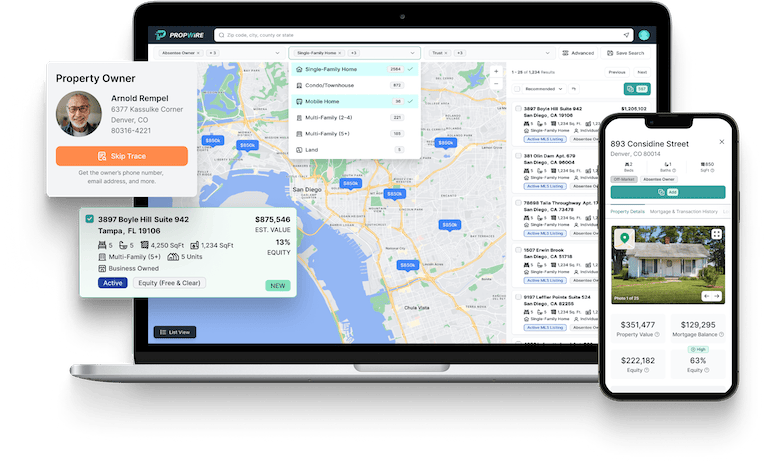
Jerry Norton
Jerry Norton
Mar 18, 2024

Whether you're a new or experienced real estate investor, one of your biggest challenges will be funding.
Not only how you can get funding, but what the best funding option is.
You may consider a Blanket mortgage. Or, you may wonder "how many mortgages can I have?"
Did you know there's a funding option that is fast, your credit history doesn't factor in, and it's a form of OPM, or other people's money?
We're talking about transactional funding.
But what is transactional funding, and most importantly, is it right for you?
Keep reading to find out!
Transactional funding, also known as same-day funding or flash funding, is a short-term lending option where real estate investors take out short term loans and pay back the loan quicker than a traditional loan — sometimes within the same day or week.
Let's take a look at some of it's components.
It's true!
Unlike traditional options, transactional funding is based on the real estate deal itself, not your financial history, such as your credit score or income level.
Because transactional funding spans from a few hours to a few days, it’s designed to fund quick turnaround transactions, which is perfect for real estate investors like yourself who has found an advantageous deal.
That's right. Even if you don't have any of your own money to invest in real estate, you can use transactional funding.
By using transactional funding, you can capitalize and close deals quickly — without the longer timeline usually required by traditional financing.
Because you aren't stuck with applying for one loan at a time, transactional funding allows you to pursue more than one deal at a time, which can provide a higher ROI in the long run.
Transactional funding is a form of OPM, which allows you to invest in real estate without using your own money.
Transactional funding usually requires higher fees and costs compared to traditional financing options.
Transactional funding isn’t offered everywhere; because of this, finding a lender can be difficult and time consuming.
Let's take a look at the transactional funding process from start to finish.
The first step in the transactional funding process is property acquisition — and putting the property under contract.
If you’re looking to find a property to put under contract, use Propwire’s search tool that allows you to search 157+ million MLS & off-market properties 100% free.
The next step is for you as the investor to apply for the transactional funding with the lender.
Remember, with transactional funding, you may not be required to submit your credit score and income history. Instead, the deciding factor for the property and the deal itself.
After your application is reviewed and approved, funding will come your way in as short as a week or as long as a month.
In the case of wholesaling, the next step is to find an end buyer and complete the transaction. Or, if you're a flipper, the next step is to purchase the property yourself.
The final step in the process is for you as the real estate investor to repay the transactional funding loan, usually from the proceeds of the property's sale.
As a real estate investor, one of the hardest parts may be funding.
That’s where transactional funding comes in.
Not only is it quick and efficient — your credit score isn't required. Plus, you can use it even if you don't have your own money to invest!
Use this article to help decide if transactional funding is right for you so that your next real estate investment can be your most profitable one yet.
Free Property Search
Find Your Next Wholesale Deal, House Flip, or Rental Property Investment.
Search Now