
Free Property Search
Find Your Next Wholesale Deal, House Flip, or Rental Property Investment.
Search Now
Jerry Norton
Jerry Norton
Nov 16, 2023

When homeowners fall behind on mortgage payments, they often have no choice but to sell the property through two options: short sale or foreclosure.
When homeowners fall behind on mortgage payments, they often have no choice but to sell the property through two options: short sale or foreclosure.
Both short sales and foreclosures are advantageous opportunities for real estate investors to purchase properties at affordable prices — that is, if you know the difference between them.
The difference between a profitable real estate deal and one that loses money comes down to your real estate education.
That’s why, in this article, we’ll break down a short sale versus a foreclosure so that you, as a real estate investor, can understand how to utilize each one in your real estate investing business.
The biggest difference between a short sale versus a foreclosure is who initiates the process.
Lenders will initiate a foreclosure after four to six months of missed mortgage payments.
If the homeowner is unable to settle their debt, the lender will use the foreclosure process to repossess the home.
At this point, the lender aims to sell the property as quickly as possible.
On the other hand, a short sale happens when a homeowner sells their property for less than market value to pay back part of their mortgage debt.
In this scenario, a homeowner might owe $500,000 on their mortgage balance, but sell the property for $450,000.
He or she would continue to pay back the remaining $50,000 to their lender after the sale.
Unlike a foreclosure, homeowners initiate short sales themselves.
However, homeowners do need approval from their mortgage lenders to short-sell the property.
Now that we know the difference between a short sale and foreclosure, let’s look at each more in depth so that you can utilize them profitably in your real estate investing business.
The first step in any short sale is the homeowner getting approval from their lender. At this point, the homeowner has likely entered the pre foreclosure process and is looking for financial solutions.
This process requires extensive documentation from the homeowner illustrating their financial situation. The homeowner will also need to find their own buyer for the property. Lenders often take up to a year to approve a short sale.
There are many ways for you as a real estate investor to find potential short sellers and purchase properties at a below market value.
This include browsing short sales through:
Or, you can use Propwire’s industry-leading real-time MLS and off-market property dashboard.
It’s as simple as filtering by “Lead Types” and selecting “Preforeclosures”.
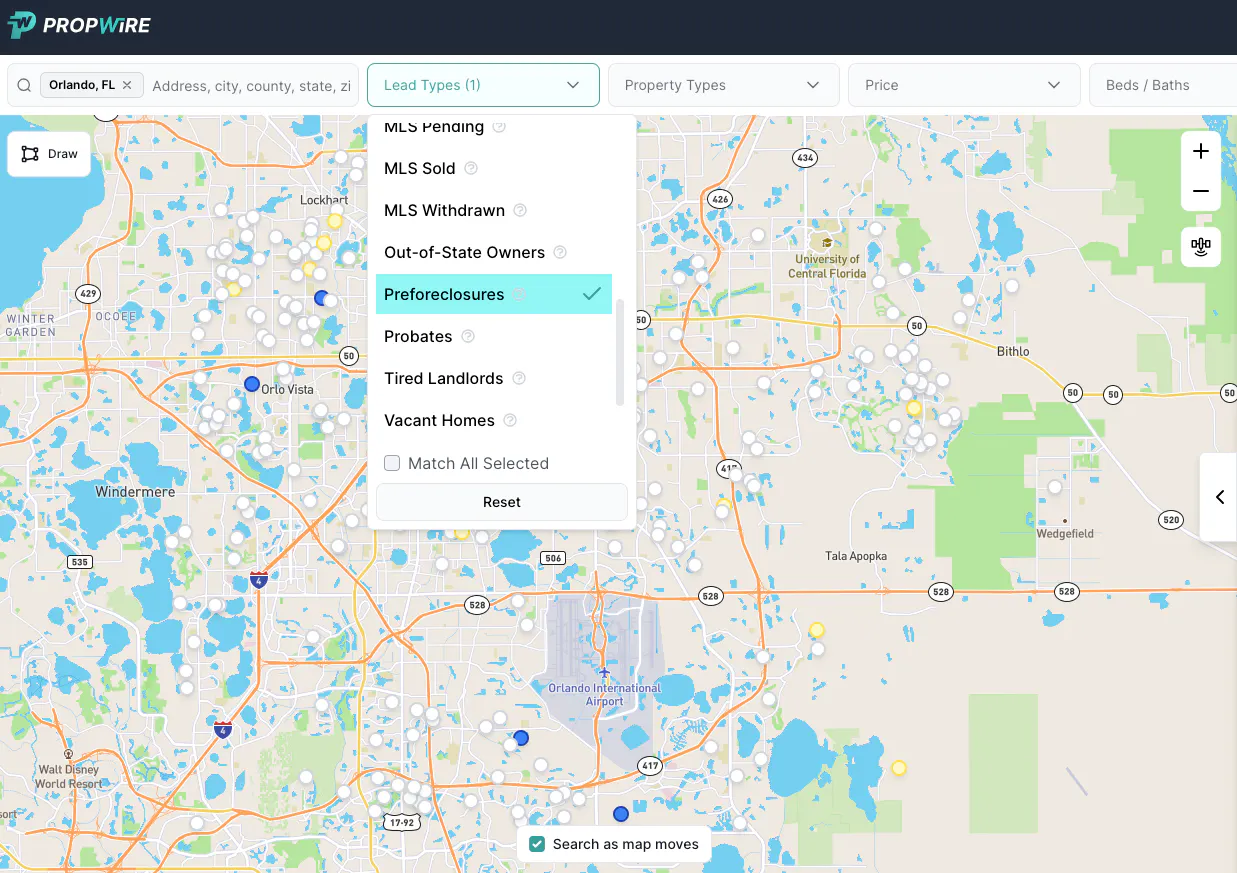
This selection will provide you with pre-foreclosures in your chosen location, and give you the option to skip trace to find and contact the owner of the property.
From there, you can start the conversation about purchasing the property with the owner.
Using Propwire’s real time database is one of the best and easiest ways to find pre foreclosure properties in your area today.
Short sales are risky because they take months to complete. There’s also no guarantee that the original lender will approve the sale. This means that investors could spend an extensive amount of time working on these deals — with no return to show for it.
Even if the lender does approve the sale, the buyer is usually on the hook for closing costs and other associated fees.
Additionally, most of these homes are sold as-is.
This means that the seller won’t make any repairs or upgrades to the property.
If the home has major structural or utility issues, this could result in a serious headache for the buyer down the road — which is why, as a real estate investor, you may be able to purchase the property for a below market value.
For homeowners, short sales tend to do less financial damage than a foreclosure.
While both processes negatively affect the homeowner’s credit score, short sales are easier to recover from.
A short sale also allows the homeowner to recoup some of their debt. In some scenarios, it’s even possible for the lender to forgive the remaining mortgage balance.
The profitability of a short sale versus a foreclosure for real estate investors will depend on the individual property.
Keep in mind that foreclosures tend to be priced lower than short sales.
However, buyers have the option to negotiate the price of a short sale, whereas this option isn’t available for foreclosures.
Now that we’ve broken down the short sale process, let’s switch gears and focus on the foreclosure process.
The foreclosure process starts when the homeowner misses their monthly mortgage payments.
Most lenders will initiate the foreclosure process once the homeowner is four to six months in default.
While a short sale can be viewed as a negotiation, a foreclosure is forced by the lender.
The laws around the foreclosure process vary from state to state. In some states, the lender must file a notice of intent, while in others, the lender must file a foreclosure lawsuit.
In the case of a foreclosure lawsuit, the homeowner has the opportunity to contest the decision.
Next, the foreclosed home is put up for auction as-is, where real estate investors can bid for the property.
If there are no buyers at auction, the lender is forced to buy back the property themselves.
Then, the lender will attempt to make sales directly to buyers.
At this point, the foreclosed home is referred to as a “real-estate owned” property, or REO.
Lenders market their REOs directly to investors through their websites.
You can also browse REOs directly through the US Department of Housing and Urban Development, or HUD.
Or, you can use Propwire’s industry-leading real-time MLS and off-market property dashboard.
It’s as simple as filtering by “Lead Types” and selecting “Bank Owned (REOs)”.
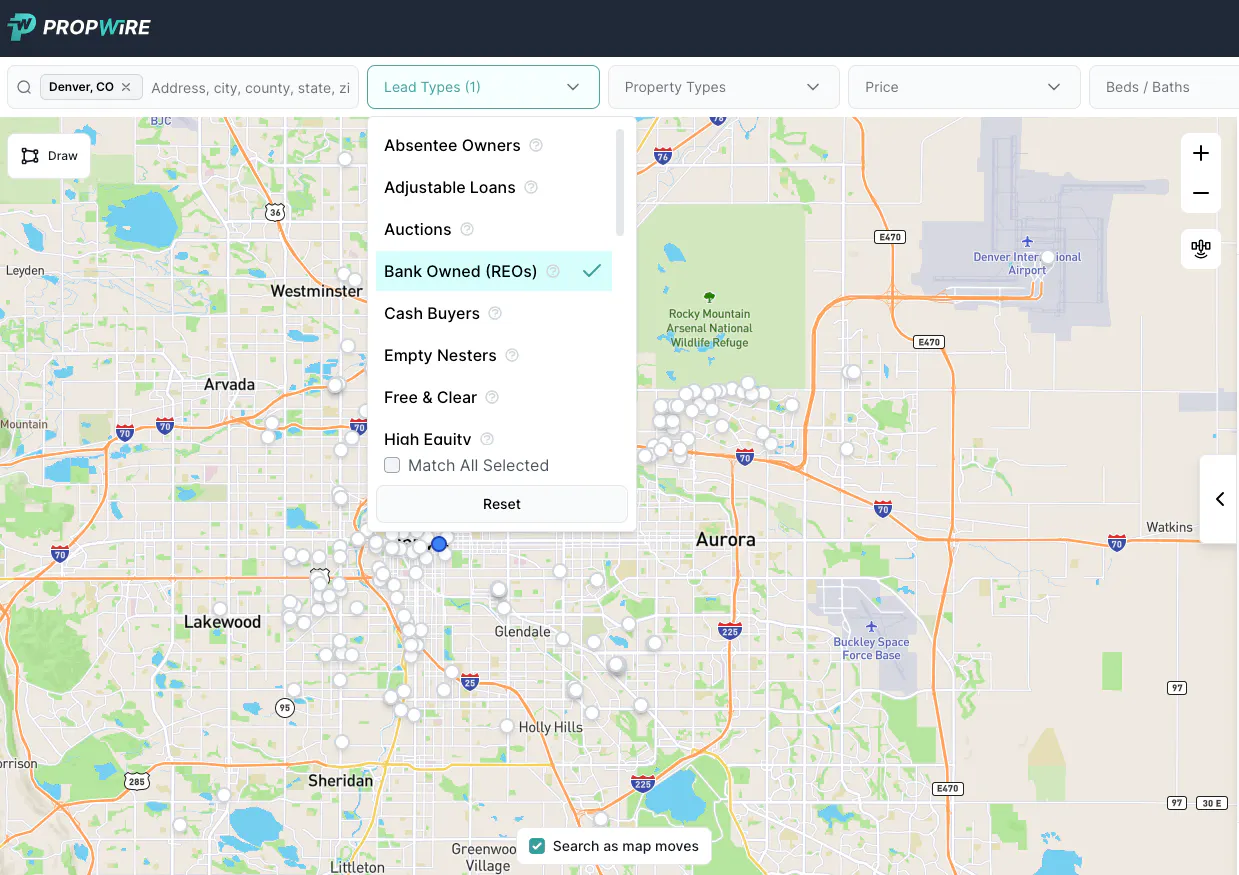
Using Propwire’s real time database is one of the best and easiest ways to find REO properties in your area today.
Next, we’ll take a look at some of the most commonly asked questions associated with a short sale versus a foreclosure.
The short sale process takes anywhere from a few weeks to a year, depending on your negotiations with the seller and the original lender’s approval.
Interested real estate investors should plan for the process to take at least six months.
The foreclosure process can take up to 15 months from the first missed mortgage payment through to the lender’s repossession of the property.
For investors, buying a foreclosed home at auction is a fairly quick process.
However, if you buy an REO directly from a lender, the process takes much longer — sometimes up to a year.
Buying a short sale or foreclosure home won’t hurt your credit score.
However, homeowners who need to make a short sale or enter foreclosure due to missed mortgage payments will see a significant dip in their credit scores.
Short sales allow buyers to purchase properties at much lower prices than they would on the mainstream housing market.
However, short sales are also very time-consuming, and the properties likely won’t be in perfect condition, requiring renovation work on the part of the real estate investor.
In many cases, short-sale homes are a worthwhile investment, even with these pitfalls.
Investors will need to evaluate each property’s potential on a case-by-case basis.
Your success as a real estate investor depends upon your real estate knowledge, and that includes understanding the types of properties available and how they differ from one another.
Short sales tend to provide more room for negotiation and are often in better condition than foreclosed homes. However, purchasing foreclosed homes is a more straightforward process.
Both of these distressed home types are much more affordable than standard properties. They present a unique opportunity for savvy investors who are willing to take a risk and build their portfolio.
Whether you’re looking for short sale properties and/or properties in foreclosure, utilize Propwire’s industry leading database to find your next real estate investment.
Free Property Search
Find Your Next Wholesale Deal, House Flip, or Rental Property Investment.
Search Now