Free Property Search
Find Your Next Wholesale Deal, House Flip, or Rental Property Investment.
Search Now
Jerry Norton
Jerry Norton
Nov 16, 2023
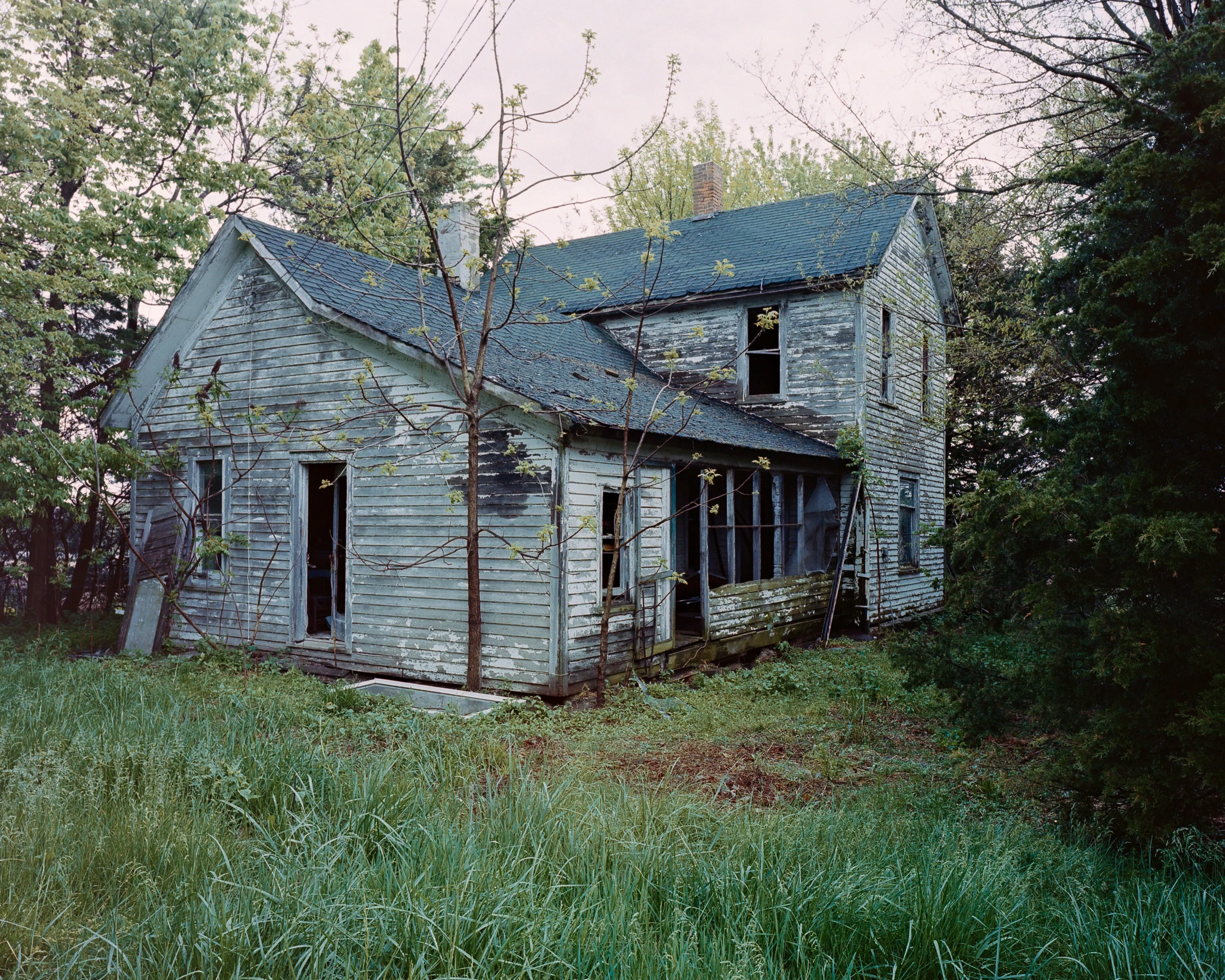
As a real estate investor, you’re looking for distressed properties that are below market deals that you can purchase, renovate, and sell for a profit.
As a real estate investor, you’re looking for distressed properties that are below market deals that you can purchase, renovate, and sell for a profit.
As you sift through real estate leads with this process in mind, you’ll notice homes in pre-foreclosure and homes in foreclosure.
What’s the difference between the two?
Your success as a real estate investor is not only dependent upon your ability to get deals; it’s dependent upon the real estate investing education you have that you apply to deals to ensure that you minimize your risk and maximize your profit.
In this article, we’ll break down the pre-foreclosure process as well as the foreclosure process so that you can use them to your advantage when searching for leads as a real estate investor.
Home buyers typically obtain a mortgage loan from the bank to purchase a home or investment property, which the bank will provide stipulations for how much should be repaid monthly.
If the property owner misses three or more monthly payments, the bank will issue a default notice.
Once the bank sends a notice, the property becomes a pre-foreclosure, and the bank will reclaim it if the owner cannot resolve the issue.
Typically, the pre-foreclosure process lasts 90 days, and the lender will notify the county recorder's office.
After claiming the property, the bank will issue a notice of trustee sales and inform the public that the property is available for auction.
The bank may also place advertisements in newspapers for three weeks detailing the property and the date of the sale.
The pre-foreclosure process lasts 3 — 10 months, giving the owner time to prevent losing the property until it's ultimately foreclosed.
Pre-foreclosure is a tense situation for many homeowners, but it presents several monetary benefits for a real estate investor. The three main perks include:
The biggest reason to buy a property in pre-foreclosure is that owners are highly motivated to sell the asset before foreclosure hits and harms their credit — a general rule of thumb is that you can expect your score to decrease by 100 points.
This being said, you're more likely to get the best deal since owners are more willing to negotiate under such pressure.
Pre-foreclosures often fly under the radar of most real estate investors because they aren't always listed on the market.
In addition, some investors shy away from the risks involved with buying a pre-foreclosure property.
These factors make it easier to seal the deal without getting caught up in a bidding war.
Pre-foreclosures sell fast since there's no heavy paperwork or red tape during the buying process.
Since you're dealing directly with a pressured homeowner, there will be no bidding war or cumbersome government forms to fill, allowing you to acquire the desired property with little to no hassle.
While buying a pre-foreclosure comes with some perks, it also has some downsides. These include:
Properties often enter pre-foreclosure due to financial complications from the property owner; this monetary misfortune also reflects on the house as it's often left in disrepair.
Buying a house in pre-foreclosure often means that you will have quite a bit of repair, both interior and exterior, to do.
Besides the money needed to transform the fixer-upper into a livable space, some pre-foreclosure properties may have hidden costs unrevealed to the investor.
For example, a building may have outstanding liens or unpaid taxes, which transfer to you as the new homeowner.
While homeowners are willing to negotiate to sell a pre-foreclosure, the amount you pay may still be slightly higher than a home that has gone into foreclosure.
On the other hand, a foreclosure is when the 3 — 10 month pre-foreclosure process expires, and the bank fully repossesses the property.
In this case, the bank will advertise the product in the appropriate channels and then sell it to the highest bidder.
The opening bid is typically based on the property's value and financial situation, including:
If the property doesn't sell at the bank's auction, the lender will use a broker or other entity to liquidate the property.
During foreclosure, the previous homeowner doesn't just lose their house — he or she ends up with a damaged credit score and financial record.
While foreclosures are unfortunate for homeowners and come with challenges for investors, there are perks in adding one to your real estate portfolio. These advantages include:
As previously mentioned, banks want to liquidate foreclosures quickly and lend the money to borrowers for a profit.
This urgency makes foreclosures easy to acquire since they're auctioned at a meager price.
In some cases, you can offer even lower for the property, as it's common for lenders to accept lowball offers to do away with the property quickly.
By purchasing the property at a low price, once the renovation and sale is complete, you can experience a tremendous return on investment.
Lenders are typically used to purchase real estate investments, and for foreclosures, some financial institutions will accept a lower down payment to finance the property.
These factors make foreclosures great for beginner investors to build a portfolio without high costs.
Lenders need to recoup as much money as possible from foreclosure since keeping it loses them money.
This urgency means you can close deals quicker.
This faster buying process gives you more time to assess the property and begin renovations to make it rentable or sellable.
The low down payment, quick buying process, and potential profitability entice buying a foreclosure.
However, this decision also comes with some cons, which include:
Some real estate investors avoid foreclosures because of the difficulty in inspecting the property before making an offer.
Often, investors cannot check the property they're buying, creating a 50/50 chance of getting a home with minimal damage or a home that needs more than just a basic renovation.
You won't be able to tell if the home you're bidding on has significant damage until you own it — one of the biggest downsides.
Foreclosures may have active liens and outstanding taxes, which transfer to you as the new owner.
You may need to clear these exceptional debts before taking full ownership of the property.
You can find pre-foreclosure and/or foreclosure properties — if you know where to look.
Next, we’ll break down some of the best places that you can find these real estate investing opportunities.
Finding pre-foreclosure properties in your area is just a click away with Propwire.
Utilizing access to real-time MLS and off-market property data, you can filter by “Lead Types” and select “Preforeclosures”.
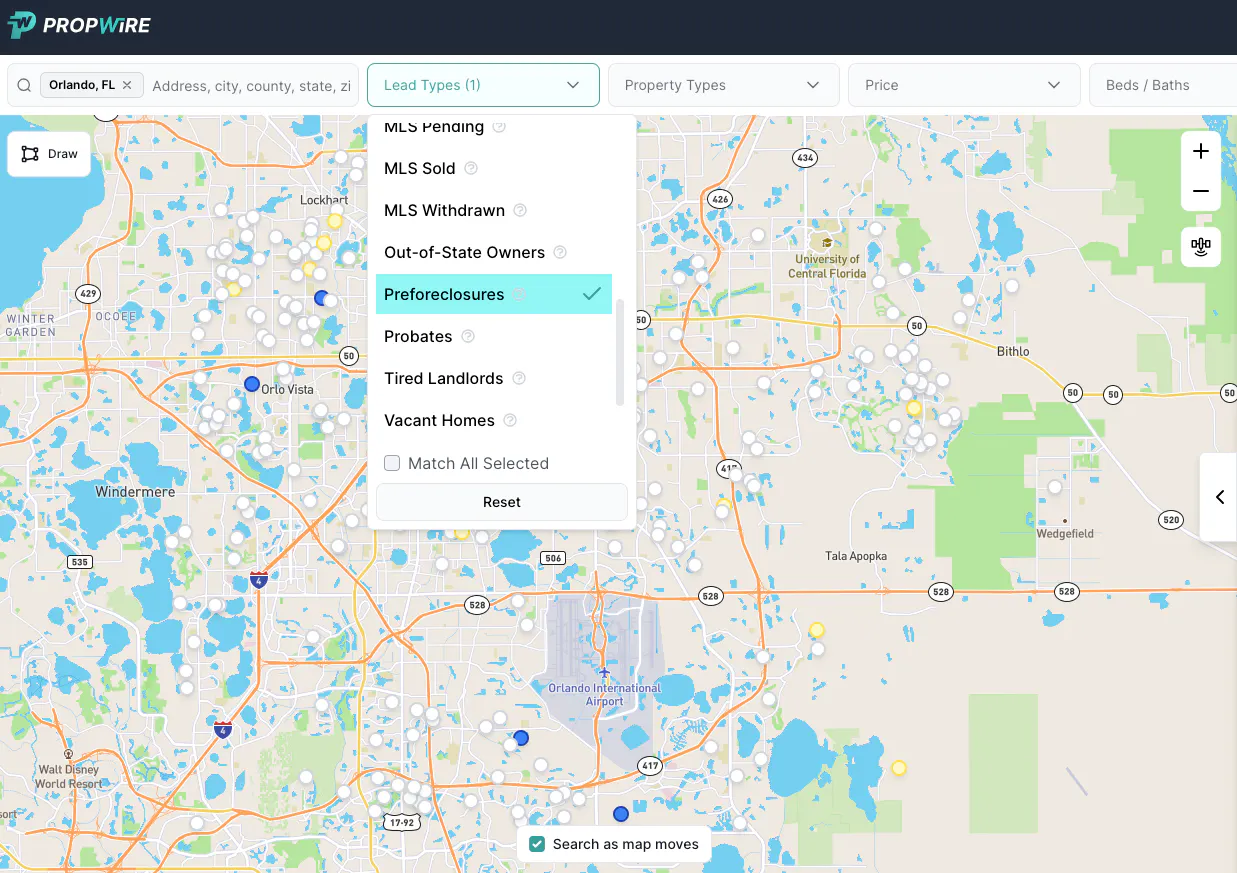
This selection will provide you with pre-foreclosures in your chosen location, and give you the option to skip trace to find and contact the owner of the property.
Finding pre-foreclosure properties in your area is just a click away with Propwire.
Utilizing access to real-time MLS and off-market property data, you can filter by “Lead Types” and select “Preforeclosures”.
This selection will provide you with pre-foreclosures in your chosen location, and give you the option to skip trace to find and contact the owner of the property.
From there, you can begin the conversation about purchasing the property.
Using Propwire’s real time database is one of the best and easiest ways to find pre foreclosure properties in your area today.
Another method to find pre foreclosure or foreclosure properties is checking through public records for:
These items can be found at your local property records office.
Your local newspaper is also a goldmine for pre-foreclosures, because homeowners typically advertise them for sale during the 3 to 10 months.
Auction houses are one of the most reliable places to find foreclosures for sale, with some selling hundreds of properties — in a single day!
If you’re looking to purchase a foreclosed property, consider attending an auction in your area.
You just might find your next real estate investment.
Your real estate investing education can be the difference between a profitable deal and a deal that loses money.
That’s why it’s so important to understand terms such as pre-foreclosure and foreclosure, along with understanding the difference between the two.
Remember: a pre foreclosure is when the lender sends a notice about the pending repossession of an unpaid property. On the other hand, a foreclosure occurs when the bank has taken the home and is ready to be resold.
While unfortunate for the homeowner, both options can provide significant financial benefits to real estate investors once the properties are repaired.
If you’re looking for a property in pre foreclosure or foreclosure, utilize the methods listed in this article to find your next investing opportunity.
It just may be your most profitable one yet.
Free Property Search
Find Your Next Wholesale Deal, House Flip, or Rental Property Investment.
Search Now