
Free Property Search
Find Your Next Wholesale Deal, House Flip, or Rental Property Investment.
Search Now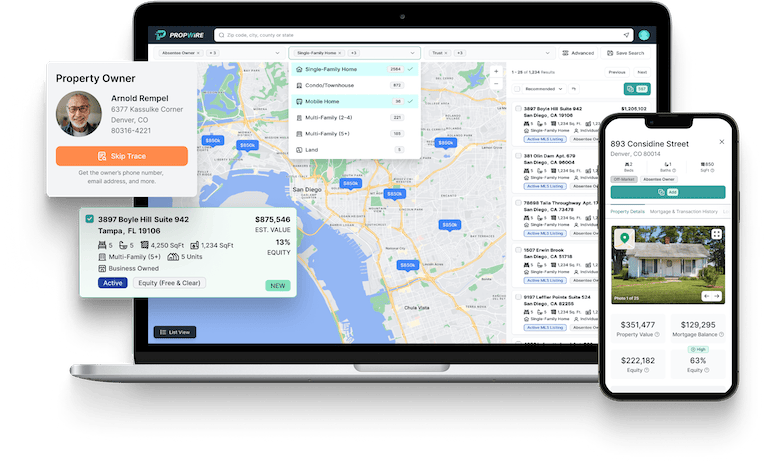
Jerry Norton
Jerry Norton
Aug 8, 2024

The main reason consumers think in this manner is because house prices do tend to rise over time when we look at trends across history. While disasters and recessions can throw a wrench into these numbers, temporary slumps typically don’t last long. Plus, the property will always retain some value, so you know you won’t go in the red with this type of investment.
If you’re considering investing in real estate, you should research a buy and hold real estate strategy. Like any other method, this long-term strategy has pros and cons. Get fully informed about buy and hold real estate strategies below.
Buy and hold real estate is a real estate investing method that involves buying a property you plan to own for some time.
As time goes on, the value of the property increases. Even better, investors rent out the properties as they increase in value.
This provides an additional monthly source of income. It also helps the investor keep the property in good condition.
Keep in mind that without using the property as a rental, investors could lose out on some of their profit when they decide to sell.
That’s because over time the property could start to deteriorate. Renters will help keep the place up, inform you about potential issues, and help you cover the expenses needed to repair the property until you sell it.
Buy and hold real estate investments offer many benefits, including:
While the exact profit depends upon the property itself and its surrounding neighborhood, generally speaking buy and hold real estate strategies can be very profitable, especially when the housing market experiences an uptick and the property continues to appreciate.
Like all investment, the buy and hold real estate method does have its downsides. Here are a few disadvantages of this strategy:
Here is how to successfully utilize this method in three simple steps:
The first step in buying and holding real estate is to buy your property.
Compared to other forms of real estate investing that target vacant or zombie properties, you can experience a faster return on investment by choosing a property that’s in good condition and in a good area.
Since you’ll be renting out the property soon, you’ll want to make sure that there aren’t any conditions that will prevent you from renting it out as soon as possible.
Next, you’ll want to rent out the unit.
To do so, you’ll need to find tenants, ensure the unit is up to par, and create a rental agreement.
Over time, you’ll be responsible for the unit's upkeep, so you’ll need to invest time and money into managing the property.
In the years to come, you’ll want to keep an eye on the market.
When you see that selling the property would result in a hefty investment return, make the move.
Doing so can not only yield a profit; it can boost your confidence and help you then take the next step of your real estate investing career.
The best areas to implement a buy and hold real estate strategy will vary over time. Here are a few of the best buy and hold markets:
The buy and hold real estate method is one of the most common investment strategies due to how straightforward it is for beginners and pros. Next, we’ll go over a few other strategies and how they compare.
House flipping is a strategy where investors buy a property intending to sell it quickly.
It’s different from a buy and hold real estate strategy because it’s a short-term strategy that aims to take advantage of appreciating home prices.
BRRR stands for buy, rehab, rent, and refinance. It’s an investment method that involves purchasing a distressed or unwanted property, investing in fixing it up, renting it out, and then refinancing that home.
Investors then use the profit to buy another property.
This strategy is different from a buy and hold real estate method because it usually involves more initial investment and upkeep.
After this step, it is pretty similar in that the investor will rent out the property to start getting monthly income.
Renting out properties is one part of a buy and hold strategy. With both methods, the property owner seeks tenants to rent the unit for a monthly fee.
Keep in mind that there are taxes associated with all forms of real estate investing, including buy and hold real estate.
Be sure to have budget set aside, given that you will get taxed with a buy and hold real estate investment strategy in two main ways: capital gains taxes and income taxes.
Buy and hold real estate strategies are a tried-and-true method for using properties to build wealth.
While the initial investment is hefty, the potential for profit over time is very attractive for those willing to put in the work to find tenants, maintain the property, and keep an eye on the market.
If you’re looking for a property to buy and hold, utilize Propwire’s database of MLS and off-market properties for free today!
Free Property Search
Find Your Next Wholesale Deal, House Flip, or Rental Property Investment.
Search Now